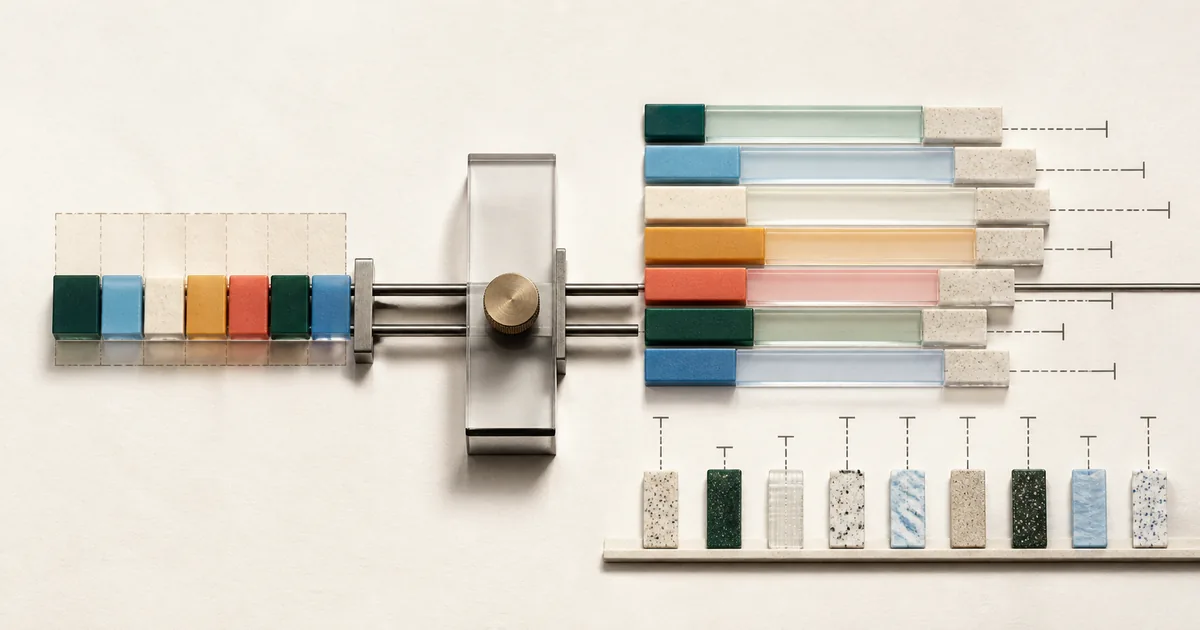
You give the task an hour because the finished version looks like an hour of work. Then the hour fills with finding the file, remembering the decision, answering a question, fixing the formatting, and realizing the “small change” affects three other places. The plan was not dishonest. It was based on the clean story of doing the task, not the messier history of tasks like it.
Psychologists call this pattern the planning fallacy. In classic experiments, people underestimated how long their own work would take even when they had relevant past experience. (Buehler et al., 1994) opens in a new tab The mistake is not simply bad arithmetic. We tend to imagine the specific future plan and underuse the outside view: what comparable work actually required.
The future plan usually appears cleaner because it leaves out the seams. You picture writing the report, not locating the chart, asking for the missing number, reformatting the appendix, or losing twenty minutes after a context switch. You picture the main verb. Real work includes the verbs around it. Estimation improves when those surrounding verbs are allowed into the plan before the calendar is already full.
Remember the whole task, not the clean version
Memory can mislead estimates because we recall a project’s main action more easily than its interruptions and supporting steps. A review by Roy and colleagues examined how memory contributes to duration underestimation. (Roy et al., 2005) opens in a new tab Later experiments found that correcting memory for previous task duration improved predictions. (Roy and Mitten, 2008) opens in a new tab
A useful estimate therefore starts by slowing down the memory. What happened the last time this kind of work was “almost done”? Did review take longer than drafting? Did feedback arrive late? Did setup require access, files, or approvals you forgot to include? The goal is not to punish optimism. It is to give optimism a better dataset.
Before estimating, name the hidden work: setup, clarification, review, communication, recovery from interruption, and handoff. Then find one real comparison. How long did the last client deck take from opening the brief to sending the file? How long did the last “quick” website update take once testing was included? One imperfect historical example is often more useful than a beautifully detailed guess with no reference.
Make the comparison as specific as you can without turning it into a research project. “A similar landing-page copy pass took two hours across two days” is enough to challenge a thirty-minute estimate. “The last invoice batch took forty minutes once all receipts were available” separates focused time from waiting time. These small records help because they are yours, in your tools, with your interruptions and standards included.
If no record exists, start with a live estimate instead of pretending certainty. Write down your first guess, note the comparison you used, and record the actual when you finish. One task will not make you accurate, but it begins the feedback trail that future estimates need.
Plan with ranges and feedback
- Use a best-case to likely range instead of one precise promise.
- Separate focused work time from elapsed calendar time.
- Record the actual duration while the task is still easy to remember.
A range is not a way to avoid commitment. It is a way to describe uncertainty honestly. The lower end can represent a clean run, while the higher end includes normal friction. If the task has external dependencies, use two ranges: the focused work you control and the elapsed time you may need to wait. That separation keeps you from blaming yourself for delays that were never fully yours.
Time-estimation accuracy matters because plans guide self-regulation: what we start, what we postpone, and how much we commit. (Brady et al., 2022) opens in a new tab Ranges make uncertainty visible. “Forty-five to ninety minutes” is less tidy than “one hour,” but it gives the calendar somewhere to absorb reality.
The calendar also needs transition space. A task that takes sixty focused minutes may not fit cleanly into a sixty-minute block if you have to gather materials, recover from a meeting, or send the result afterward. Treating every block as pure production time creates a day that looks efficient and feels constantly late. A calmer plan gives the task a doorway in and a doorway out.
Do not turn every miss into a moral problem. Procrastination and stress interact with context, emotion, and available coping resources; the relationship is more complicated than laziness. (Sirois, 2023) opens in a new tab Ali Abdaal’s practical framing in Feel-Good Productivity is useful here: a sustainable plan should account for energy and enjoyment as well as output. (Abdaal, 2023) opens in a new tab
A short weekly review closes the loop. Compare estimate with actual, note what expanded the task, and use that evidence next time. You are not trying to become perfectly predictive. You are replacing repeated surprise with a slightly better prior, one ordinary task at a time.
Keep the review factual. “I estimated 45 minutes; it took 80 because I needed approval and had to rebuild the template” is useful. “I am terrible at planning” is not. The first statement can change the next estimate or reveal a process problem. The second drains energy while preserving the same bad input for next week.
Start with one category you repeat often: reports, invoices, lectures, videos, or design reviews. After three recent examples, use the middle result as your default and keep the full range clearly visible. This creates a small personal library of reference tasks. Over time, planning becomes less like negotiating with an optimistic future self and more like consulting your own evidence.
Sources and further reading (6)
- Exploring the planning fallacy: Why people underestimate their task completion times Journal of Personality and Social Psychology opens in a new tab
- Underestimating the duration of future events: Memory incorrectly used or memory bias? Psychological Bulletin opens in a new tab
- Self-regulation of time: The importance of time estimation accuracy Frontiers in Psychology opens in a new tab
- Correcting Memory Improves Accuracy of Predicted Task Duration Journal of Experimental Psychology: Applied opens in a new tab
- Procrastination and Stress: A Conceptual Review of Why Context Matters International Journal of Environmental Research and Public Health opens in a new tab
- Feel-Good Productivity Ali Abdaal opens in a new tab